

Case Study
Incident Investigation
Several fire incidents were reportedly caused by overheated electrical power connectors within e-mobility devices. S-E-A was asked to investigate the incidents and evaluate the validity of the claims. Measuring electric current flow through connectors during operation presented challenges for traditional measurement means.
How can the devices be tested while in motion and within the constraints of the user load rating? Was overheating occurring during normal use?
Assigned Task:
To perform the analysis, S-E-A took the following steps:
- Placed wiring harness in a Computed Tomography (CT) scanner and captured radiograph images.
- Determined the load rating for the product, and mounted the device to the Light Vehicle Dynamometer, to simulate the occupant load while allowing the wheels to spin and experience road loads akin to normal operation.
- Created a cell tap wire setup to allow current to be measured in-line with the existing connector while voltage was also monitored.
- Added thermocouples to measure ambient air temperature, both sides of the connector, and each corresponding wire.
- Performed tests with several different discharge cycles under the given loading while logging the current, voltage, and temperature data as well as the device speed.
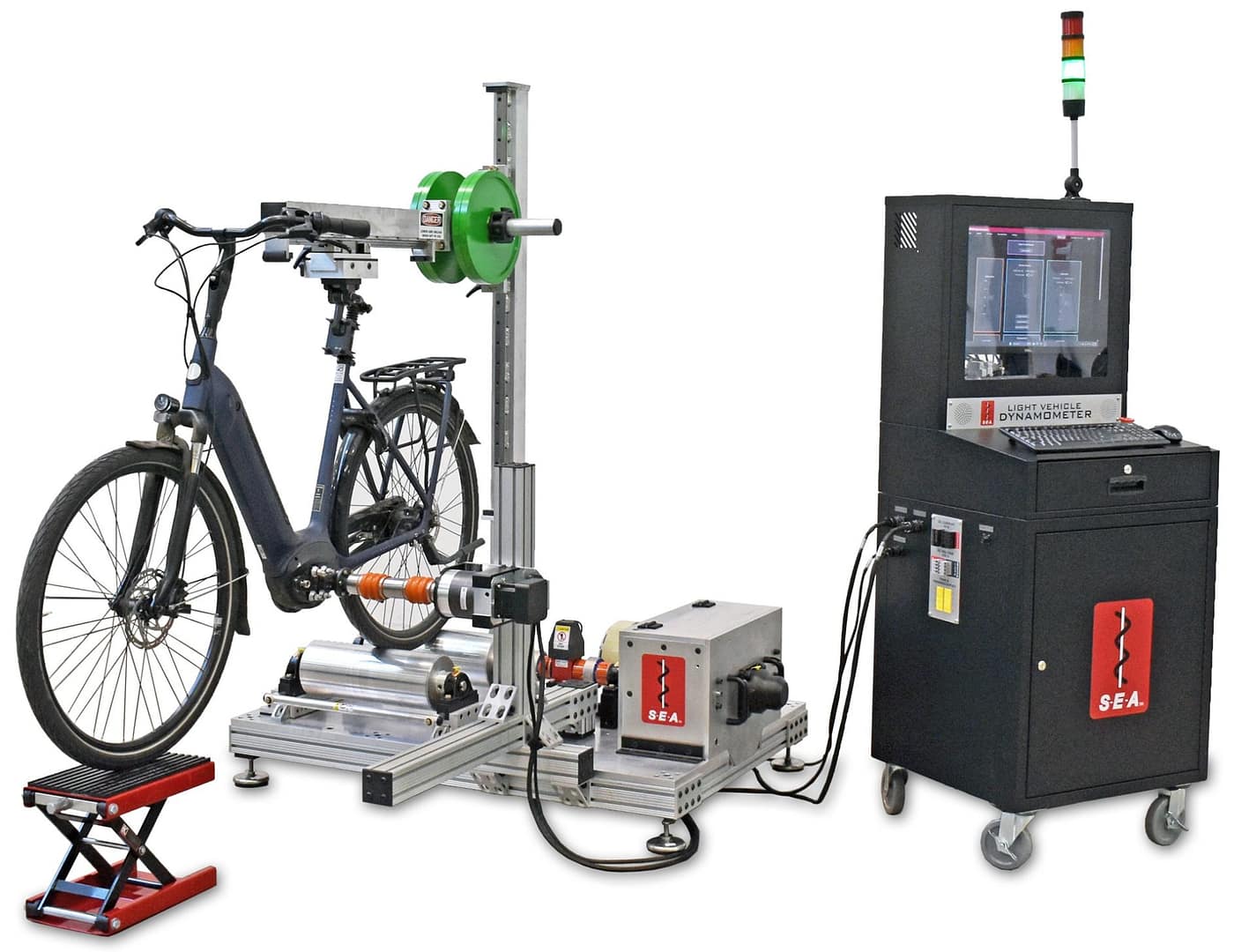
Light Vehicle Dyno – Note: bicycle shown is for demonstrative purposes only and not representative of the e-mobility device at issue in the case study.
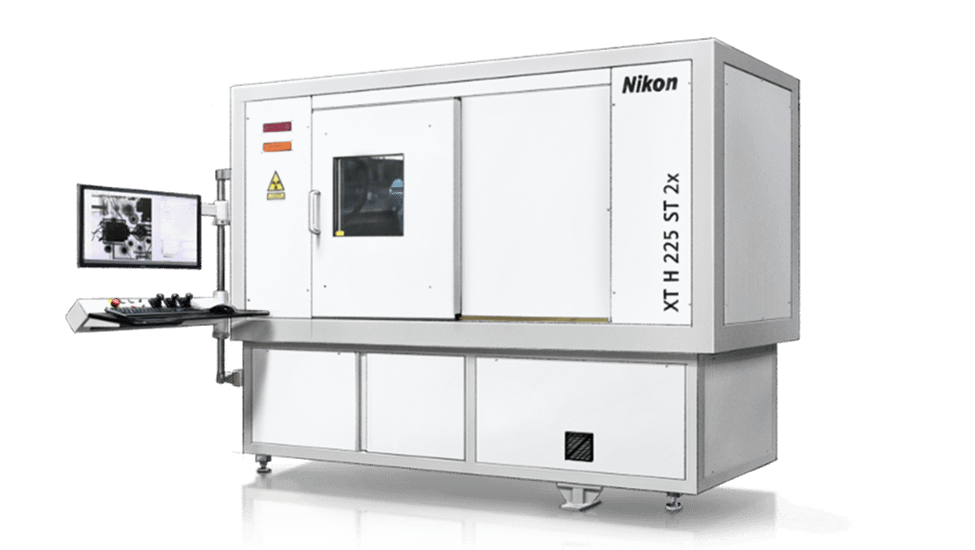
Nikon XT H 225 ST 2x X-ray CT Scanner
Test Evidence was evaluating, resulting in the following findings:
- Determined that the current flowing through the connectors was approximately 20 Amps, well within the current rating of the chosen connectors.
- In various trials, the temperature rise was documented and found to be large enough to indicate a potential issue.
- Determined that when the connector was not fully seated, additional heat was generated which could result in further risk.
- Evaluated several potential new connector types including capturing radiograph images with a CT scanner.
- Determined that another connector type showed promise for improving the issue by providing more consistent electrical contact and less temperature rise.