

Case Study
Incident and Allegations
While at a gas station drive-through, a customer ordered a small hot coffee with cream and sugar. The coffee was handed to the customer through the service window by the kiosk’s employee.
It is alleged by the plaintiff that when the driver received the coffee from the kiosk employee, the driver then handed it to their passenger. During transfer from driver to passenger, the coffee “exploded” out of the cup, causing burns to the passenger’s legs and private areas. It is also alleged that the coffee was too hot, and that the employee mistakenly loosened the lid on the coffee when passing it to the driver by “palming” the top of the cup upon transfer.
The defendants argued that the coffee was ordered with cream and sugar on the side and that the coffee was not overly hot. They stated that the coffee/cup was handed to the driver by the kiosk employee with a secure lid, not by palming the top of the cup, but holding the side of it. They alleged the driver removed the lid so the passenger could add cream and sugar and handed it to the passenger when it spilled into their lap.
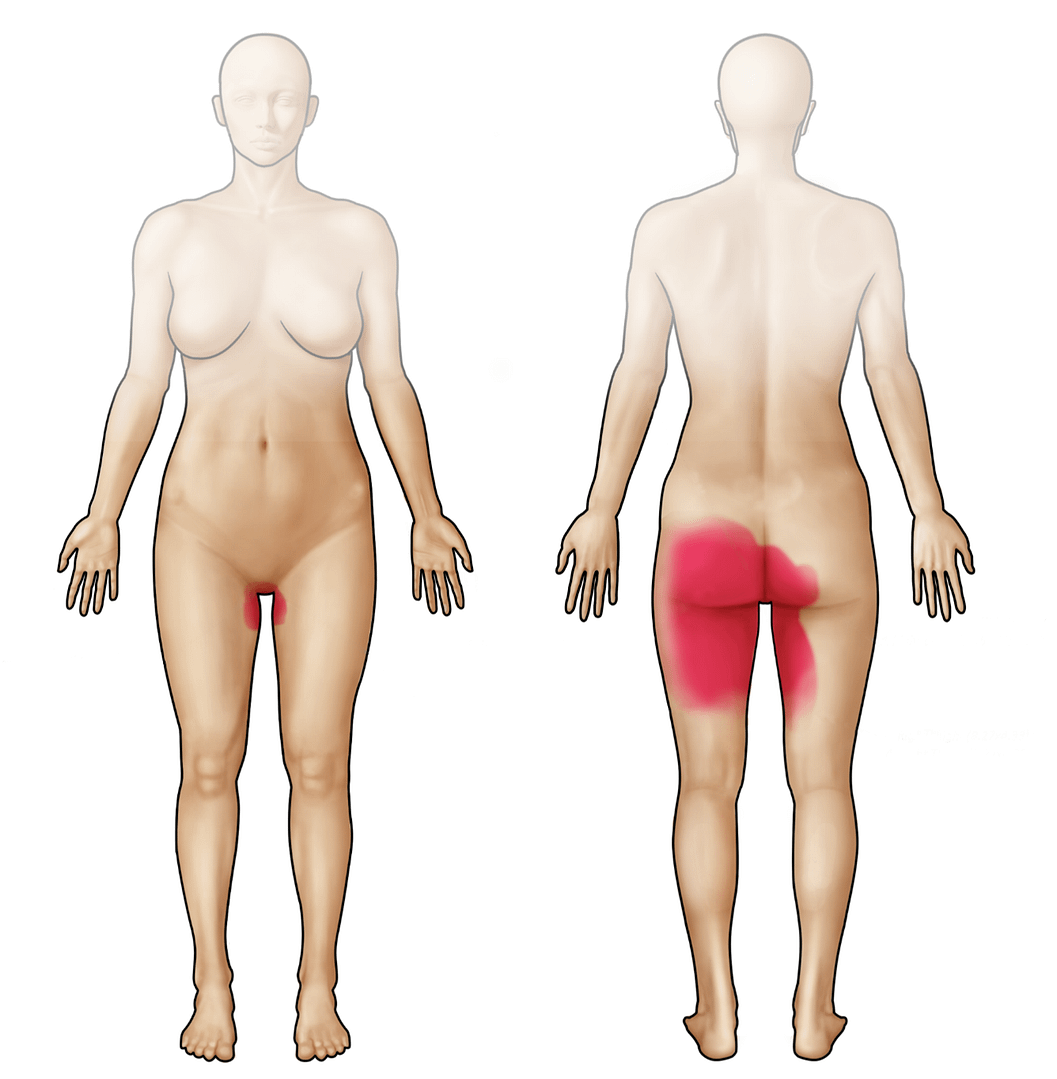
Scientifically accurate burn analysis of the subject incident based on review of medical summary.
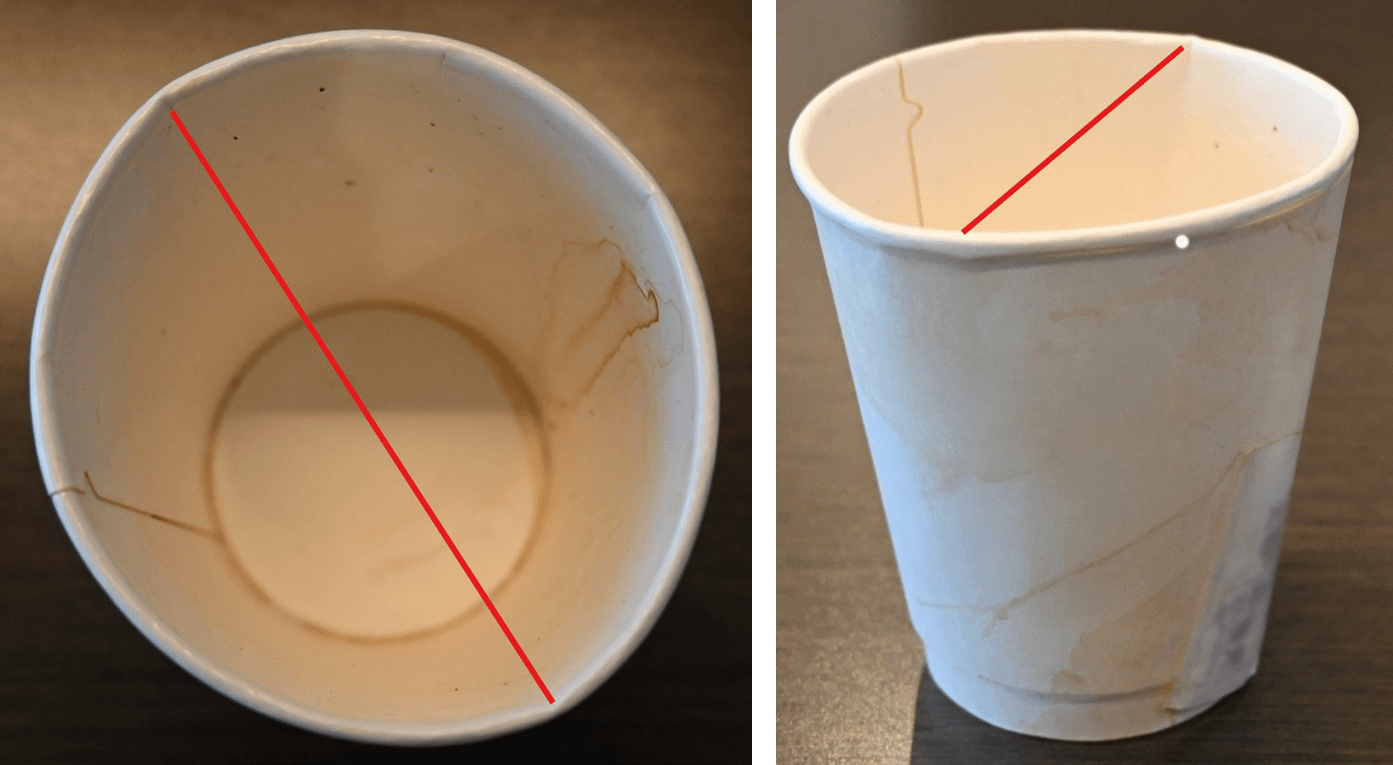
Symmetrical creases in cup indicate at some point the cup was squeezed with force applied perpendicular to crease lines.
Investigation
S-E-A was called by the gas station’s attorney to investigate the likely temperature of the coffee to determine if it exceeded industry specifications, and the most likely cause of the spill given the injuries and available evidence.
S-E-A's Digital Forensics team were able to get access to video camera footage. The footage showed an angle from inside the kiosk of the employee handing off the coffee to the customer. The coffee cup and lid were preserved and analyzed by S-E-A.
S-E-A was able to collect and investigate the following evidence:
- A temperature test of the coffee making equipment at the kiosk
- Evaluation of the cup and lid
- Medical injury evaluation of the plaintiff
- Evaluation of the security camera footage
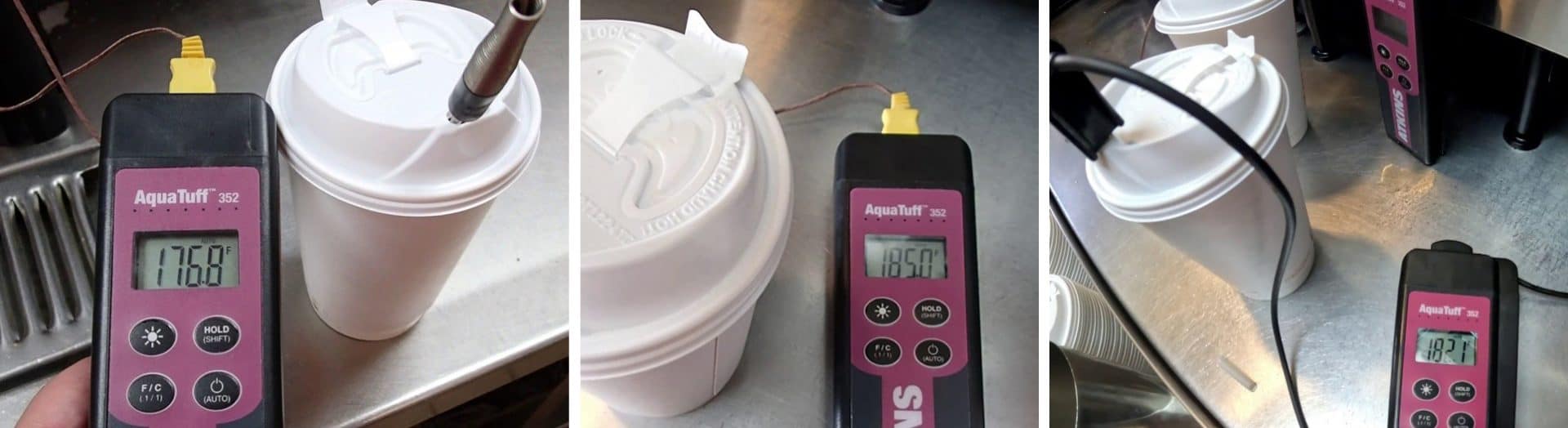
Temperature tests performed on liquid to determine max temperature within standards.
Analysis
The temperature testing of the kiosk’s coffee-making equipment showed an average serving temperature of 180°F. Recommended temperature for hot coffee as outlined by the SCA (Specialty Coffee Association), the NCA (National Coffee Association and ANSI/NSF 18-202 indicates that hot coffee should be served at a temperature of no less than 140°F, and no more than 200°F. Max temperature test result at the kiosk registered at 187°F, within industry acceptable range.
The video footage did not provide the angle to show if the employee “palmed” the cup, thereby loosening the lid. A biomechanical analysis showed the positioning of the employee’s body when handing the hot coffee to the driver would have made it uncomfortable, difficult and unlikely to transfer the cup while “palming it.”
The staining around the coffee exit hole on the cup was from sloshing during movement while the lid was secured on the cup. It is probable the lid was secure when the cup was creased, indicating the cup was squeezed from opposite sides.
Assigned Engineer

Dawn Freyder, P.E.
The burn areas on the plaintiff were limited to a small area of the front upper thigh and private areas, but more pronounced on the buttocks and back of the thigh. This is not consistent with the coffee “exploding” when being passed from driver to passenger.
Testing confirmed the hypothesis that the burn pattern was consistent with the cup getting squeezed (and creased) between the thighs.
Evaluated evidence resulted in the following findings:
- The coffee was served at a temperature within industry standards.
- Biomechanical analysis of the the video footage shows the arm angle that the server used to hand the cup to the plaintiff would have been extremely difficult to have palmed the top of the cup. The more comfortable and common way to hold the cup given that arm angle would be holding from the bottom.
- The cup lid staining was indicative that the lid was secure when it was handed to the driver.
- The burn pattern and S-E-A's testing showed the injuries occurred when the cup was squeezed and coffee was spilled into the lap, rather than the coffee being sprayed in an explosive manner.